
In less than a week, Inter Milan, last year’s Champions League finalists, were eliminated by the unknown Bodo/Glimt, a Norwegian club from a city of 50,000 people.
At the same time, Galatasaray, who survived the league with just ten points, destroyed Juventus 5–2 in Istanbul and then scored 2 goals in Torino, humiliating a shy Juventus.
For Inter fans, this is painful. The Nerazzurri lead Serie A by ten points. The Scudetto is almost certainly coming to Milano.
But the club may have just lost between 60 and 80 million euros in Champions League money. The results dont lie.
Inter Milan, Napoli & Juve Champions League Exit: The Numbers Tell A Story We Keep Avoiding

Let’s start with the history, because it is very compelling. Italian clubs have won the Champions League 12 times. with Inter Milan holding three wins.
AC Milan alone has seven, second only to Real Madrid. Juventus two. In 1990, Italian clubs won all three major UEFA competitions in the same season.
From the mid-1980s to the late 1990s, Serie A held the highest UEFA ranking in the world for more than a decade. Serie A was the league to watch and where top players wanted to play.
Then came Calciopoli in 2006. And then two decades of financial and structural challenges
The data today tells a concerning story. Spain leads all nations with 20 Champions League titles. England has 15.
Italy sits third with 12, but the last Italian club to win it was Inter Milan in 2010 under José Mourinho, 15 going on 16 years ago.
In the same time, Spain has added seven more trophies. England five. Italy zero. Yes zero!
Serie A currently ranks second in UEFA’s coefficient rankings, ahead of Germany and behind England.
That sounds pretty good right? But coefficient rankings does not represents reality by years. They capture a broader historical performance.
The current situation tells a different story: Italy sent four clubs to the Champions League this season.
However, by the Round of 16, all except Atalanta, a club from Bergamo, had been eliminated by lower ranked teams.
The Azzurri: A Crisis In Three Acts
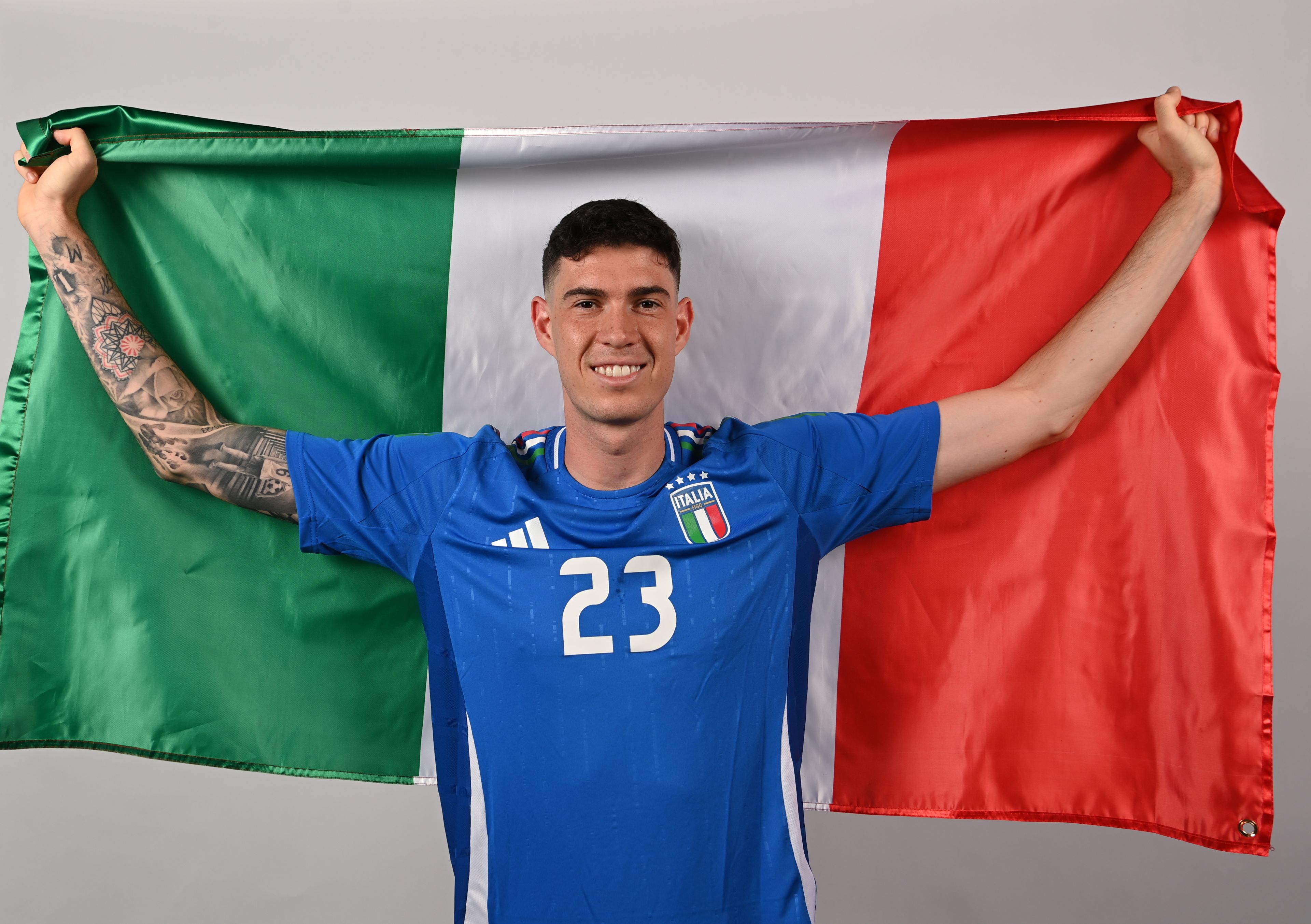
Club football’s structural weakness becomes a national emergency when you look at the Azzurri.
Italy won the World Cup four times: 1934, 1938, 1982, 2006. They are the second most decorated nation in FIFA’s history.
Then came 2018, the first failure to qualify in 60 years. This was a national painful trauma. Then 2022, a second consecutive absence, despite having just won Euro 2020 in London.
Now, in 2026, Italy must play through the playoffs for the third consecutive qualification cycle, having finished second in their group behind Norway.
On March 26, under Gennaro Gattuso, they will host Northern Ireland in Bergamo in a single-leg semi-final. Win that and they face Wales or Bosnia on March 31 for a World Cup spot.
Northern Ireland. A nation of 1.9 million people. Ranked 60th in the world.
Italy finished behind Norway, and has to go through a playoff to be able to attend FIFA 2026 which is hosted by Canada, Mexico, and the United States.
This is a tournament where Italy’s geography, and the size the Italian American community of 16 million in North America represents a sizable commercial and cultural opportunity.
American Money, Italian Results: The Paradox

Here is the great irony of the current crisis. American and Canadian investment funds now own stakes in close to 50% of Italian football clubs.
Reigning Champions League finalists Inter Milan majority shareholders are Brookfield, a Canadian owned fund. AC Milan belongs to RedBird Capital. Roma is owned by the Friedkin Group.
Fiorentina by the late Rocco Commisso, Italian-American entrepreneur. Even smaller clubs carry North American capital on their books including Venezia.
The money arrived. The results did not follow in equal measure.
Why? The answer likely lies in what money alone cannot buy: identity, methodology, and the patient cultivation of a football culture from the roots up.
Compare this to how Italy approached tennis. A decade ago, Italian tennis was an underdog. Today Jannik Sinner is world number two and Lorenzo Musetti is ranked the 5th best.
Italy is a Davis Cup champion.
The Italian Tennis Federation invested systematically in youth academies, coaching methodology, physical preparation science, and the infrastructure that turns talented children into world-class competitors over a ten-year horizon.
It was not a financial bet, it was a cultural and technical project. The results came because the system was rebuilt from within, not purchased from outside.
The Adapt-Or-Fall Question

There is another factor the Italian football world does not like discussing openly: the tactical and physical evolution of the game.
The football Bodo/Glimt played against Inter was great football.
It was different football, high-intensity pressing, extraordinary physical conditioning, a collective system so precise that individual quality gaps became irrelevant for 180 minutes.
This is the same model Atalanta has used to outperform the other big teams in Italy under coach Gasperini.
It is, interestingly, not un-Italian in spirit, it is industrial, humble, methodical, relentless. It is the Bergamo football factory, supporter by a community of great fans.
But it required investment in athletic science, in data analytics, in sports medicine, in the physical infrastructure that supports that kind of football.
It requires youth players trained in evolving principles from the age of twelve. Principals that you cannot not teach at eighteen.
The question is not whether Italian clubs can play this way. Atalanta proves they can.
The question is whether the rest of Serie A is investing in the ecosystem buid up that can make Itlaian football competitive
The Italian Advantage Exists — But It Must Be Re-Claimed
Here is what makes this moment both concerning, and interesting.
Italy has genuine advantages that no investment fund can create:
- a football culture of extraordinary depth,
- a history that generates global attention and commercial value,
- a global diaspora numbering in the tens of millions that will be sitting in Toronto, Vancouver, and New York next year watching a World Cup that Italy may or may not attend,
- and a tactical intellectual tradition, from Herrera’s Grande Inter to Sacchi’s Milan to Capello to Lippi, that remains the most sophisticated in football history.
These are not small things. They are the Italian Advantage in football: a combination of cultural intelligence, tactical elegance, and historical gravitas that no other football nation quite replicates.
But advantages only produce results when they are applied with discipline. Italy rebuilt tennis by investing in the system that could translate cultural pride into technical excellence.
Italy was ranked third during the winter Milano-Cortina Olympics 2026, just behind Norway and the US, proving to the world its massive potential.
Football Requires The Same Commitment
Not just American capital flowing in, but Italian football intelligence flowing through Il Sistema Calcio, from the academies, the communities, through the coaching education, into the physical conditioning methodology, and ultimately onto the pitch in Europe and on the global stage.
Bodo/Glimt taught Inter a big lesson. And the only way forward is discipline, humility and hard work.
Inter is winning the Scudetto. That matters. But on March 26, the Azzurri will face Northern Ireland in Bergamo.
And if they don’t find that something, that particular Italian intelligenza calcistica, the World Cup will begin in North America without the four-time champions.
That would be a loss bigger than any prize money.
By: Andrea Zanon
Andrea Zanon is the co-founder of Confidente. He is an international advisor who has worked for financial institutions and entrepreneurs on sustainability, international affairs and development. Author of an upcoming leadership book titled: The Italian Advantage.



Heavily focused on experience and tactical ideas rather than growing players slowly caused this fall. Instead focusing on how to make football even better Serie A focus on past glory. The stadiums are old and so are the players. The fact that Inter is needing to share home stadium is the proof.
Your right but also lack of creativity we lack young players and still looking to get free agents like goretzka or perisic instead of looking for young prospects and talents