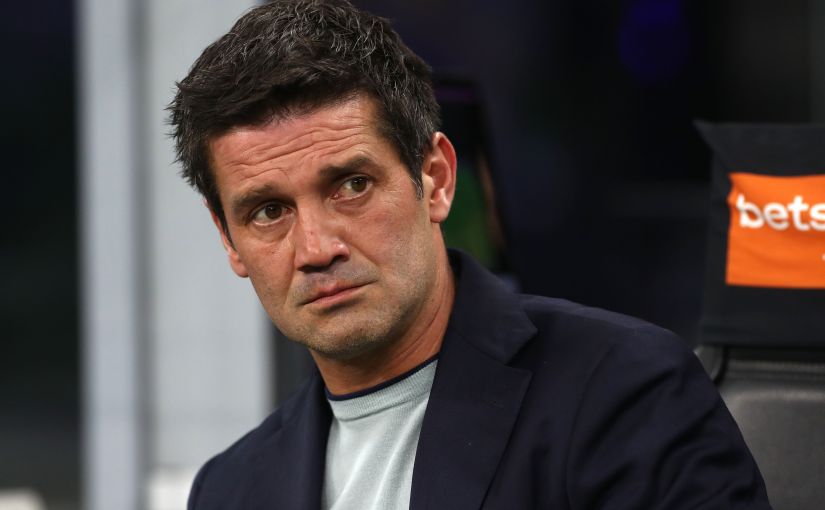
When Cristian Chivu took over at Inter Milan in June 2025, the Nerazzurri were still absorbing the 5-0 defeat to Paris Saint-Germain in the Champions League final in Munich on 31 May.
The result closed the Simone Inzaghi era at Inter in the most brutal possible way, and the summer that followed reshaped the coaching structure, the squad, and the wider strategic direction of the club more than any off-season at San Siro since Antonio Conte’s 2021 title run.
The appointment of Chivu, the former Inter defender who had been working inside the Primavera setup, was the first clear signal of how the board intended to rebuild.
Ten months on, the 2025-26 campaign has settled into a rhythm that tells you most of what you need to know about Chivu’s coaching identity. The 3-5-2 that defined Inzaghi’s years has survived with modifications.
The core spine of Yann Sommer in goal, Alessandro Bastoni and Francesco Acerbi in central defence, Hakan Calhanoglu anchoring midfield, Nicolo Barella and Federico Dimarco on the flanks, and Lautaro Martinez and Marcus Thuram leading the line has continued to carry the team. What has shifted is the tempo, the pressing triggers, and the way Chivu has integrated the new signings who arrived in the summer window.
For Inter supporters following the 2025-26 campaign from outside Italy, and particularly for Nerazzurri fans based in the United States, the Scudetto run-in has arrived inside one of the widest English-language Serie A media windows in years. DAZN’s distribution, Sky Sport’s Champions League coverage, ESPN’s Serie A output, and the growing ecosystem of club-adjacent podcasts have given supporters more ways than ever to follow Inter’s form, and in discussions across North American Inter supporter groups adult fans sometimes reference operator pages such as the BetRivers casino bonus alongside their usual matchday reading. The substance of coverage continues to sit with the football itself, and the sections below look closely at the tactical identity Chivu has built at Appiano Gentile since taking over in June 2025.
From Munich to Appiano Gentile: The Chivu Transition
The decision to promote Chivu from inside the club structure rather than pursue a higher-profile external name was made quickly. Reports through the first half of June 2025 linked Inter briefly to several coaches operating abroad, but the board under Giuseppe Marotta and Piero Ausilio settled on continuity. Chivu had coached Inter’s Primavera side to back-to-back strong campaigns, had been on the training ground at Appiano Gentile for years, and brought a coaching philosophy that dovetailed with the tactical DNA Inzaghi had built.
The first month of his tenure was spent almost entirely on pre-season groundwork. Chivu’s early communications with the squad prioritised continuity where continuity made sense, and his staff appointments reinforced that instinct. The coaching ticket combined voices from within the club with a smaller set of outside additions, and the message to senior players was that the foundation would not be torn up. For a squad that had reached a second Champions League final in three years, the steadiness mattered.
The Summer 2025 Transfer Window and Squad Rebalancing
Inter’s summer 2025 window moved on a distinct set of priorities. Reinforcing the midfield depth that the long Champions League run had exposed was the first. Adding forward options who could share the load behind Lautaro and Thuram was the second.
The arrivals of Petar Sucic from Dinamo Zagreb and Luis Henrique from Olympique de Marseille addressed both lanes. Ange-Yoan Bonny’s move from Parma gave Chivu another young forward option, and the return of Pio Esposito from his development loan at Spezia added a further domestic-grown attacking piece.
The departures were as significant. The board navigated a complicated summer around several senior players as Saudi Arabian interest circled a handful of names, and the eventual shape of the squad retained most of the core Inzaghi had built while injecting fresh legs into roles that had begun to wear down.
The balance sheet across the window reflected the Suning ownership’s continued push toward a more sustainable commercial model, with player-trading contributions carrying a larger share of the transfer activity than in previous off-seasons.
The 3-5-2 Evolution Under Chivu
Tactically, the biggest question heading into the 2025-26 season was whether Chivu would retain the 3-5-2 that had defined Inzaghi’s Inter or transition to a back four. The answer, clear by the end of the first international break, was that the 3-5-2 would stay as the base shape but that the application would shift.
Chivu’s version leans on quicker vertical transitions from defence to midfield, a slightly higher starting line for the wing-backs, and more frequent rotation between Calhanoglu and a second midfielder dropping into the build-up phase.
The defensive work has tightened noticeably. Bastoni’s left-sided role has moved closer to a hybrid centre-back and left-back depending on opposition, and Acerbi’s reading of the second line has let Sommer operate further off his goal-line on sweeper duties.
Yann Bisseck’s emergence as the primary rotation option at right centre-back has given Chivu the ability to rest Benjamin Pavard without a drop in defensive quality, and that rotation has been one of the clearer tactical wins of the first half of the campaign.
In the attacking third, the partnership between Lautaro and Thuram has continued to dictate the shape of Inter’s forward play. Their vertical combinations into the channels, the short rotation between who drops and who stretches the last line, and the consistent chance-creation they produce against low blocks have kept Inter among the highest-scoring sides in Serie A through the first two-thirds of the campaign.
Lautaro and the Captaincy Through a Second Title Window
Lautaro Martinez has carried the Inter captaincy through his most productive Serie A season yet in 2025-26. His goal tally by mid-April has placed him inside the top three in the division’s scoring chart, and his link-up with Thuram has remained the single clearest tactical pattern in Chivu’s side.
Lautaro’s leadership through the post-Munich summer was as important as his goalscoring. In a dressing room absorbing a final defeat and a managerial change at the same time, the captain’s willingness to publicly commit to the project set the tone for the rest of the senior players.
His workload management has been one of Chivu’s more delicate early calls. Inter’s schedule through autumn and winter, with Champions League midweek commitments layered onto the Serie A calendar and an Argentine national team cycle running in parallel, has demanded careful rotation.
Lautaro’s minutes have been allocated with more pragmatism than in previous seasons, and that has so far kept his output steady through the most compressed stretches of the schedule.
The Midfield Under Calhanoglu, Barella, and Mkhitaryan
Inter’s midfield continues to run through the triangle of Calhanoglu at the base, Barella on the right, and Henrikh Mkhitaryan on the left, with Piotr Zielinski, Petar Sucic, and Davide Frattesi providing rotation options.
Calhanoglu’s deep-lying control of tempo remains the clearest single influence on how Inter play, and his ability to switch the ball into Dimarco or Bisseck continues to open the first passing lane on most Inter attacks. Barella’s press-resistant receiving and box-to-box distance covered have held steady at the top end of Serie A.
Mkhitaryan’s role has evolved subtly under Chivu. The Armenian international has been asked to play slightly deeper in possession than he did under Inzaghi, which lets Barella push higher and create the overlap with Dumfries or Luis Henrique on the right.
At thirty-seven years old, his minutes have been managed carefully, and Zielinski has gradually taken on more responsibility in the games where Mkhitaryan is rested, a development that mirrors the succession planning the club has set in motion at several positions in the squad.
How Inter Fans Are Following the Spring Run-In
The primary reading for serious Inter coverage still runs through Italian football specialist outlets, club-adjacent journalists, and tactical publications. That is where the day-to-day conversation about Chivu’s selections, the Lautaro and Thuram partnership, and the Calhanoglu midfield spine continues to live, and it is where the substance of the coverage of this side will remain through the final weeks of the campaign.
What the Final Weeks of 2025-26 Will Decide
Three variables will determine how this season is ultimately judged. The first is whether Inter can convert their current Serie A positioning into a second Scudetto in three years, which would cement the post-Inzaghi transition as a coaching success on its own terms.
The second is whether they can clinch the Coppa Italia and bag a historic league double. The third is how the summer 2026 window is shaped, which depends in part on the trophies won between now and June and in part on the player-contract cycle that Marotta and Ausilio have been working through since the autumn.
Beyond those top-line questions lie the secondary ones. Chivu’s title campaign at Inter Milan, covered across this site in weekly updates, will ultimately be judged on silverware, but the tactical identity taking shape has already shifted the trajectory of several careers inside the squad.
Yann Bisseck has emerged as a genuine first-team option. Petar Sucic has bedded in more quickly than expected. Pio Esposito has continued his development curve. The younger cohort around Lautaro, Bastoni, and Barella has deepened, and that, as much as any single result, will define whether the Chivu era turns into a genuine new chapter at San Siro.



Live Comments
Welcome to our Live Comments section, where new comments will appear automatically
Add a Comment